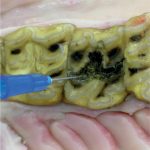
What are wolf teeth?
Wolf teeth are supernumerary teeth that serve no purpose to the modern horse. Throughout evolution, the dentition of the horse changed, and this tooth became redundant and absent in many horses.
The wolf tooth and is known at the first pre-molar and is located in front of the second premolar of each dental arcade. Wolf teeth usually erupt at six to twelve months old and are more common in females. It is possible that a horse could have four wolf teeth, but they are more prevalent within the upper arcades. These teeth can vary in size from 1-25 mm and can have varying root sizes from 0-33 mm in length.
Why do wolf teeth need removing?
Due to the location of the teeth, it is possible that they will cause bitting issues commonly exhibited as discomfort due to fracture. However, not every horse will need their wolf teeth removed by a qualified equine dentist.
When do wolf teeth need removing?
We recommend removing wolf teeth that are large and displaced. We also recommend removing wolf teeth from young horses that are about to be backed and broken. This is to eliminate any possible issues during this critical process.
If you have an older horse with wolf teeth and they are not showing any signs of discomfort, we wouldn’t recommend removal.
What is the process of removing wolf teeth?
A veterinary surgeon will sedate your horse (standing sedation) and inject some local anaesthesia around each wolf tooth. We will then elevate the periodontal ligament that holds the tooth in the maxillary/mandibular bone until the tooth is loose enough to pull out. The socket is left to heal itself. The veterinary surgeon may also decide to inject some additional pain relief/antibiotics. Find out more about horse wolf teeth removal.
How long do horses need to recover after wolf teeth removal?
This is dependent on the size and location of the wolf teeth removed. It can be anywhere up to ten days, and this will be determined at the time of the procedure. It is also essential that you are mindful that the teeth have been removed when getting your horse back into work following the procedure. You can find out more about wolf teeth removal
Are there any risks involved in the removal of wolf teeth?
The removal of wolf teeth is common practice within the equine industry. However, this procedure does have some risks associated. Due to the location of the teeth, there is a risk that the palatine artery could be ruptured. This artery lies closely to the medial aspect of the tooth and the palate. As a result, it is essential that your horse is sufficiently sedated so that the tools required can be used with precision.
How much does it cost to remove wolf teeth?
We charge an additional £30 for the removal of wolf teeth. However, it is essential that a veterinary surgeon is present to sedate the horse and provide local anesthesia. This will come at an additional cost to you.
If you are worried about wolf teeth and would like a professional consultation, you can find out more about wolf teeth removal and get your horse seen to by a professional equine dentist for peace of mind. Please do get in touch with us via the form below and we’re happy to help.