
Protect your horse from dental issues and prevent future pain with professional teeth floating and rasping. Get expert insight, guidance on floating and act now for a healthier horse.
Put simply, horse teeth rasping or floating is the removal of sharp edges that can naturally form over time in your horses mouth. These sharp edges can cause pain and discomfort.
A good way of preventing dental issues related to horse teeth is to get them checked and floated where required on a frequent basis.
The frequency depends on factors like age, dental condition, diet, and individual requirements. Consult a qualified equine dentist for guidance on the right timing and frequency for your horse’s dental care.
If your horse displays teeth-related issues such as bleeding, problems feeding or assymetric cheeks, don’t hesitate to contact us and book an floating or rasping appointment today. Your horse’s well-being is our priority.

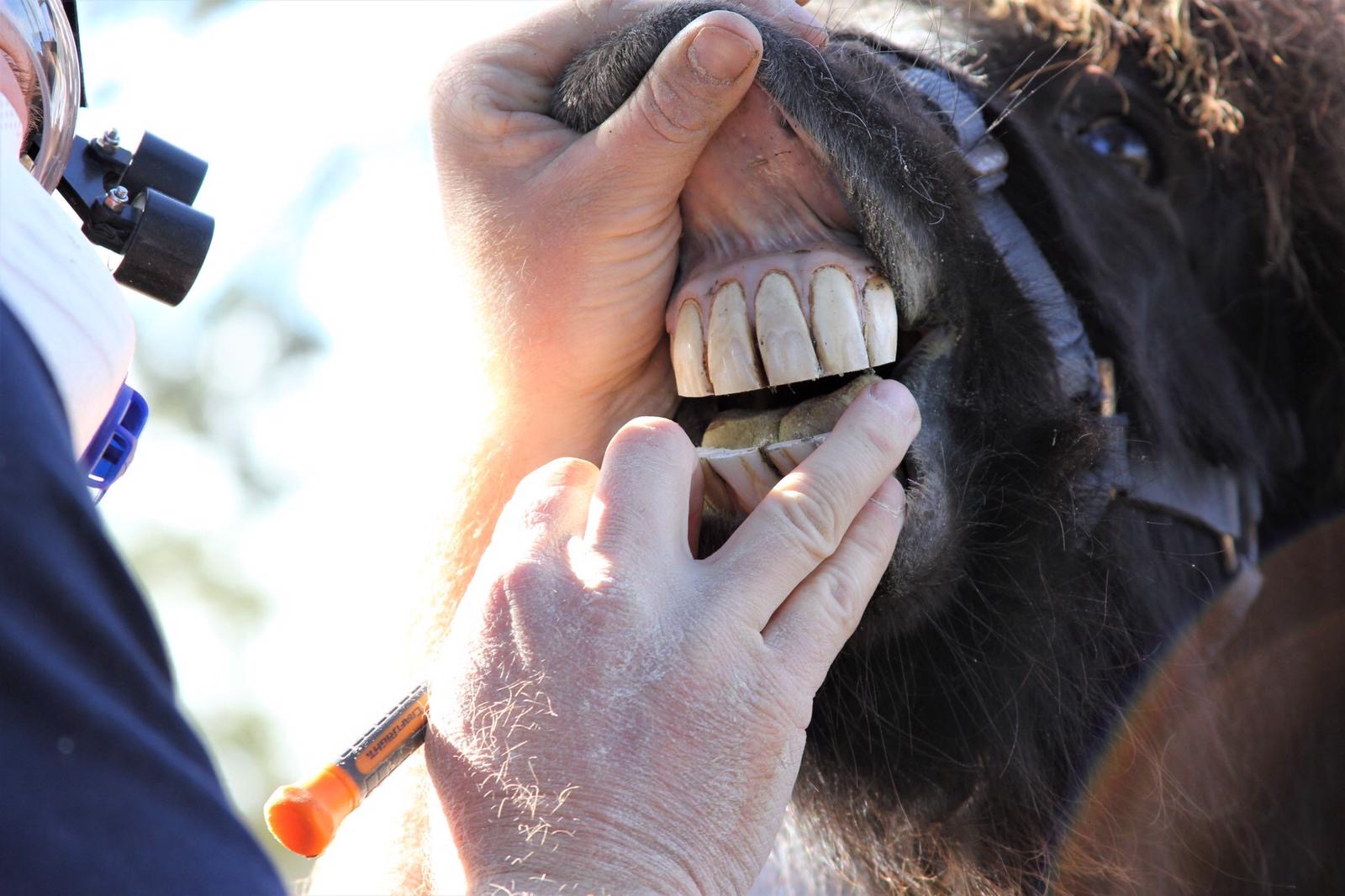
Dental floating, also known as equine dental floating (or rasping in the US), is essential for maintaining your horse’s oral health. Qualified equine dentists or veterinarians specialising in equine dentistry perform the floating procedure.
Like humans, horses have two pairs of teeth – baby and adult. However unlike humans, horse’s adult teeth keep growing throughout their lives, requiring regular floating and rasping to eliminate sharp edges, abnormalities, and maintain tooth balance. This ensures a pain-free, comfortable experience and maximises their nutritional intake.
Horse teeth consist of three tissues: cementum, dentin, and enamel, wearing unevenly during chewing. Enamel, the toughest tissue, can become dangerously sharp, potentially causing cuts and fractures. Unattended sharp teeth lead to discomfort and nutritional and riding issues.
As horses naturally grind their teeth, sharp points can also naturally develop over time, causing pain, discomfort, ulcers, and fractures if untreated.
Dental floating also addresses hooks and ramps that form on the second premolars and last molars due to uneven wear or dental abnormalities. Smoothing these irregularities restores proper tooth surfaces and enhances chewing function.
By ensuring even tooth wear, floating prevents imbalances that can lead to more dental issues and difficulties in chewing and maintaining proper nutrition. Trust the experts to keep your horse’s smile healthy and happy.

During a routine equine dental checkup or floating procedure, we assess your horse’s overall appearance and perform a visual inspection of their head and teeth. We also check for pain or asymmetry through palpation.
To get a closer look and identify abnormalities, we use a speculum to open your horse’s mouth, aided by a headlight and dental mirror.
If needed, we float your horses teeth by expertly address ingsharp edges and overgrowths, ensuring your horse chews comfortably in order to prevent pains or bleeding.
Traditionally, a specialised tool called a float was used, but modern procedures employ motorised power tools that mimic natural tooth wear.
Our specialised, motorised dental equipment allows us to precisely correct sharp points and irregularities, aiming for a balanced, functional bite and top-notch oral health.
Rest assured, our equine dental professionals are suitably qualified with BEVA/BVDA or are qualified veterinarians. Your horse’s well-being is our priority.
The advantages of having a dental specialist float your horses teeth are numerous. Pimbury Equine staff are be qualified, knowledgeable, experienced and well connected within the equine dentistry community.
Which means they will have the skills required to float your horses teeth pragmatically and refer complex issues to the right place.
A professional will have a good understanding of the chewing cycle and be able to reduce sharp edges and balance your horse’s mouth correctly to improve chewing efficiency. This means your horse’s will be able to chew their feed effectively and improve nutritional uptake in the gut.
They will also be able to reduce teeth in the best way to meet your sporting requirements. This will ensure that your horse is comfortable with it a bit in and not exhibiting any unfavourable behavioural symptoms.
A skilled professional will use a number of well developed floating and rasping techniques to ensure that your horse is comfortable during the process and so under minimal stress.


Finding a qualified equine dental specialist for horse floating near you is easier than you think. Many of us belong to the British Association of Equine Dental Technicians (BAEDT), simplifying appointment arrangements. Visit the BAEDT website to locate local specialists across the UK.
Understanding horses’ teeth is key; they continually erupt, but enamel, the hardest tissue, wears slowly, leading to sharp points and discomfort. These issues can even affect tooth integrity. That’s why regular assessments and floating by a qualified equine dental specialist are crucial for improved chewing, sporting comfort, and overall well-being.
Our BEVA/BVDA qualified equine dentists ensure efficient and stress-free dental care for your horse. While most horses can be treated without sedation, we’ll use it when needed. Your horse’s health is our priority.
We charge £60 per horse for horse teeth floating and rasping. We recommend horses get their teeth checked on a 3 – 6 month basis to ensure optimal dental health and to catch any sharp edges before they start to cause pain and discomfort.
Protect your horse from dental issues and prevent future pain and discomfort with professional teeth floating and rasping. Get expert insight, guidance on floating and act now for a healthier and happier horse.